Industry 04 / 06
Education.
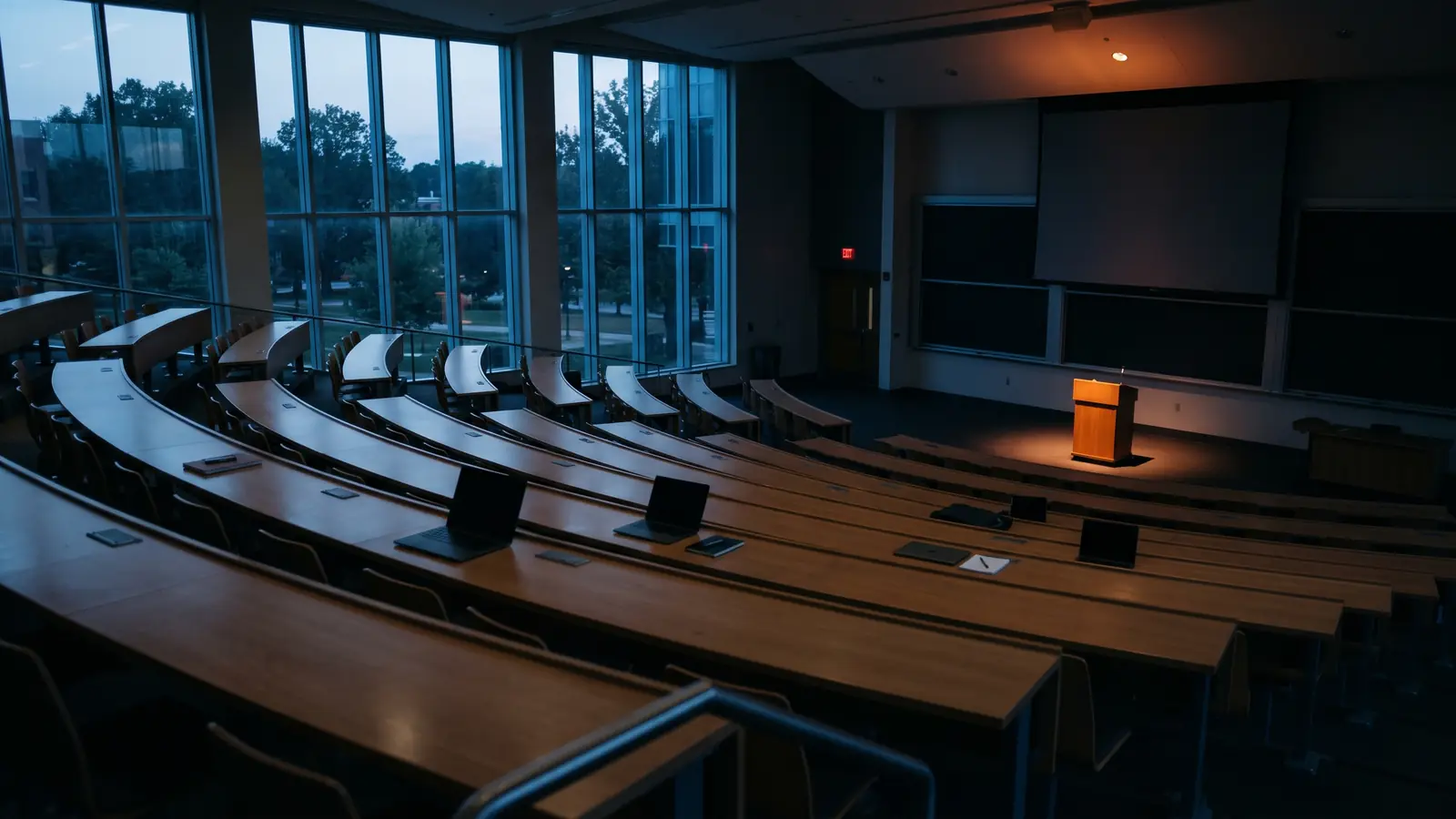
Testing day, a full lecture hall, a district-wide device rollout — education networks are judged on their busiest hour. We design for density, keep students and staff safely separated and connect campuses with backbones that last.
The challenge
What makes education networks different.
- 01
Hundreds of devices in one room
Lecture halls and classrooms put more clients on each access point than almost any office.
- 02
Different users, different rules
Students, faculty, administrators, guests and building systems all need separate access and filtering.
- 03
Buildings of every age
Campuses mix new construction with older buildings that were never designed for modern cabling or Wi-Fi.
Our approach
How we build it.
- High-density classroom Wi-Fi
- Student, staff and guest separation
- Fiber backbones between buildings
Wireless is designed for capacity first, using real class sizes and device counts, then validated with post-install surveys. Role-based access puts each user and device on the right network automatically.
Between buildings we plan fiber backbones and redundant paths, and document everything so your IT team can manage the result without us.
Relevant services
Where we usually start.
Wireless Networks
Coverage mapped. Capacity planned. Roaming that works.
ExploreStructured Cabling
The physical layer every packet depends on.
ExploreNetwork Design & Implementation
Architectures built for speed, segmentation and growth.
ExploreNetwork Security
Segmentation, edge defense and Zero Trust access.
ExploreQuestions
Common questions.
- Can you scope projects for E-Rate?
- We can provide clear, itemized scopes and bills of materials that suit your procurement process. Funding eligibility decisions remain with your district and its advisors.
- Can work be done over the summer break?
- Yes. Large cabling and wireless projects are usually planned around breaks, with surveys done earlier in the year.
- Do you support content filtering?
- We integrate the network with your filtering platform so policy follows the user and device.
Other industries
Also built for.


Network assessment
Ready for a network that holds?
Tell us about your sites, circuits and goals. A senior network engineer replies within one business day.